
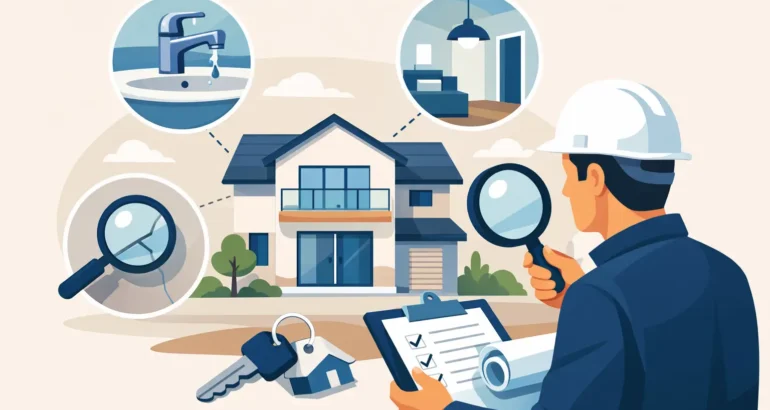
If your developer has given you a handover date and everything looks tidy in the show home, it is easy to assume the property is ready. That is exactly why buyers ask, what is a pre completion inspection? In simple terms, it is a structured inspection of a new-build home carried out before legal completion, with the aim of identifying visible defects, poor workmanship and unfinished items while there is still an opportunity to press for action.
For buyers, that timing matters. Once completion has taken place, you still have rights, but the process of getting defects acknowledged and remedied can become slower, more frustrating and more disruptive. A pre completion inspection gives you evidence before you move in, when access, accountability and leverage are often stronger.
What is a pre completion inspection in practice?
A pre completion inspection, often shortened to PCI, is a detailed review of a new-build property shortly before handover. It is usually arranged when the home is structurally complete and most finishes have been installed, but before the purchase legally completes.
The purpose is not to provide a general opinion in the way a traditional home buyers survey might for an older property. It is a targeted assessment of construction quality, finish, completeness and visible compliance-related concerns within a new-build context. The inspection focuses on whether the home appears to have been built and finished to an acceptable standard, and whether defects should be raised with the developer before the keys are handed over.
That can include cosmetic issues such as damaged plaster, poor paint finish and chipped sanitaryware, but a proper PCI should go further than surface-level snagging. It may also identify concerns with brickwork, roofing details, drainage presentation, insulation continuity, ventilation provision, window installation, loft condition and signs of incomplete or substandard workmanship.
Why buyers arrange one before completion
A brand-new home should not mean a defect-free home. In reality, many new-build properties are handed over with a mixture of minor snags and more serious faults. Build programmes are tight, multiple trades are involved, and finishing quality can vary significantly from plot to plot.
The value of a pre completion inspection is that it creates an independent record before you legally take possession. That matters for several reasons.
First, it helps you understand the actual condition of the property you are about to complete on. Marketing suites and staged plots are designed to sell confidence, but your own home may present very differently once it is inspected closely.
Second, it gives you evidence-led grounds to request remedial works. Developers are more likely to act where defects are documented clearly, photographed properly and described in a standards-based way.
Third, it can reduce the disruption of moving into an unfinished or defective property. Some issues are easier for the builder to address before occupation than after furniture is in place and family life has started.
What does a pre completion inspection cover?
The scope depends on access, build stage and the provider carrying out the inspection, but a thorough PCI typically covers both internal and external elements that are visible and reasonably accessible at the time.
Internally, that includes walls, ceilings, floors, doors, ironmongery, stair finishes, glazing, kitchens, bathrooms, sealant, tiling, decorations, ventilation terminals, loft access and general fit and finish. Externally, the inspection may consider brickwork, render, pointing, roofline details, drainage covers, external joinery, paths, driveways, boundaries and visible aspects of roofing where access or safe viewing allows.
The strongest inspections are not just a list of marks on paintwork. They assess whether items appear complete, correctly installed and consistent with expected tolerances and recognised new-home quality standards. That distinction is important. A buyer may notice a scratch on a windowsill, but miss a poorly installed extractor, blocked weep vents or unsafe loft boarding arrangement.
How is it different from a snagging inspection?
This is where confusion often arises. A pre completion inspection and a snagging inspection are closely related, but they are not always identical.
A snagging inspection is a broader term for an inspection that identifies defects and finish issues in a new-build home. It is often carried out after completion, when the buyer has moved in and full access is available. A pre completion inspection happens before legal completion, usually by arrangement with the developer or under the relevant new-home quality process.
The advantage of a PCI is timing. The advantage of a post-completion snagging inspection is access. Before completion, some areas may still be incomplete, locked off or subject to site restrictions. After completion, a surveyor can often inspect more freely, test more fittings in normal use and assess the property as occupied space.
So which is better? It depends on the plot, the developer’s access policy and how close the home is to actual completion. In some cases, a PCI is the right first step, followed by a more detailed post-completion snagging inspection once the property is fully handed over.
Who carries out the inspection?
Not all pre completion inspections are equal. Some are carried out as part of the developer or warranty provider process, while others are undertaken independently on behalf of the buyer.
An independent inspection offers a different layer of protection because the surveyor’s role is to assess the property objectively and report findings with evidence. For buyers who want clear reporting and credible defect identification, independence matters. It reduces the risk of issues being minimised or framed too generously in favour of the builder.
A specialist new-build surveyor will usually understand common defects, expected tolerances, relevant guidance and how to document concerns so they are harder to dismiss. That is particularly important if the issues later need to be revisited through the developer complaints process or warranty route.
What happens after the inspection?
The useful part is not the walk-round itself. It is the reporting. A proper pre completion inspection should result in a written record of defects and concerns, normally supported by photographs and clear descriptions of location and issue type.
That report can then be submitted to the developer so items can be reviewed and, where accepted, rectified before or shortly after completion. Some developers respond promptly and professionally. Others may push back, reclassify items as acceptable, or defer action until after handover. That is one reason evidence quality matters.
It is also worth being realistic. A PCI does not guarantee every item will be fixed before you move in. Build schedules, contractor availability and site pressures can affect timescales. But without an inspection and a documented report, you are in a weaker position from the outset.
Are there any limits to a pre completion inspection?
Yes, and a trustworthy provider should be clear about them.
A pre completion inspection is largely visual and non-invasive. It cannot confirm hidden defects behind finishes or within sealed construction elements. Access may be restricted in some parts of the home, and utilities may not be fully commissioned at the time of inspection. External areas may still be in progress, and weather can affect what can reasonably be assessed.
It also does not replace specialist follow-up where needed. If an inspection raises signs of heat loss, roof defects or moisture-related concerns, additional thermal imaging, roof inspection or more technical investigation may be appropriate.
That does not reduce the value of the inspection. It simply means buyers should see it as an important part of quality control, not a magic shield against every possible issue.
When should you book one?
Ideally, you should start asking about pre completion inspection access before exchange or as soon as your purchase is progressing toward handover. Developers vary in how they handle third-party inspections, and leaving it too late can narrow your options.
The best time is usually close enough to completion for the property to be substantially finished, but early enough for meaningful defects to be raised before legal handover. If the plot is still changing daily, the inspection may be premature. If completion is already hours away, there may be little practical opportunity for action.
For buyers across the Midlands and South Yorkshire, the key point is straightforward: do not wait until problems become your problem to own. New Homes Inspections regularly sees defects that would have been easier to challenge before occupation than after boxes are unpacked and the developer has moved on to the next phase.
Is a pre completion inspection worth it?
For most new-build buyers, yes. The cost of an independent inspection is modest compared with the cost, inconvenience and stress of chasing avoidable defects after completion. More importantly, it gives you clarity at a point when confidence is often based on assumption rather than evidence.
A good PCI is not about being difficult with the builder. It is about making sure the home you are buying is inspected properly, defects are recorded clearly and any concerns are raised at the right time. That protects your investment and helps you move in with greater confidence.
If you are asking what is a pre completion inspection, the better question may be whether you are comfortable completing on a brand-new home without one.
2 thoughts on “What Is a Pre Completion Inspection?”