
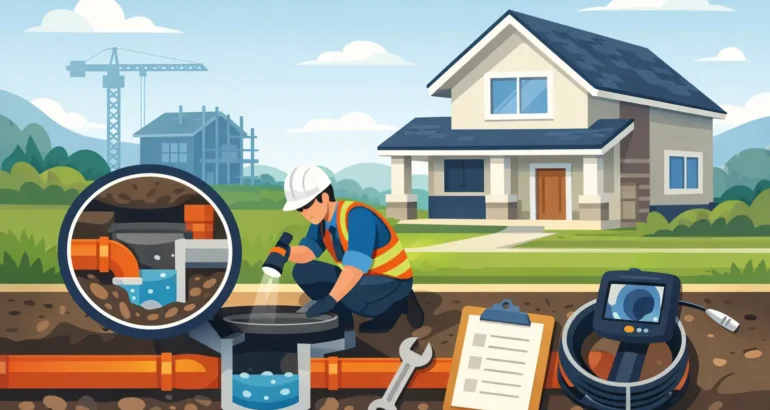
A blocked gully, standing water beside the house or a foul smell from a manhole can turn a new home handover into an immediate dispute. When you inspect new build drainage before completion, you are checking more than whether water disappears down a plughole. You are looking for signs that the foul and surface-water systems have been installed, connected and finished properly – before defects become your problem to pursue.
Drainage is largely hidden once the home is occupied. That makes early inspection particularly valuable. A clear, evidence-led report gives you a practical basis for requesting remedial work from the developer while the property remains under their control.
Why new-build drainage deserves close attention
New homes are built quickly, often with several trades working across the same plot. External drainage can be affected by poor falls, damaged pipework, incomplete connections, debris left in gullies or poorly finished ground levels. Some issues become obvious after the first substantial rainfall; others may only appear when bathrooms, kitchens and appliances are all in regular use.
The consequences are not limited to inconvenience. Incorrect surface-water drainage can lead to ponding around patios, paths and external walls. Defects in foul drainage can cause slow-running fixtures, unpleasant odours or repeat blockages. If water is directed towards the building rather than away from it, prolonged saturation may also affect landscaping, paving and the immediate ground around the property.
A professional inspection cannot always confirm the condition of every underground pipe without specialist access or a CCTV drainage survey. However, a competent surveyor can identify visible warning signs, assess accessible chambers and gullies, consider drainage falls and record defects that require the developer’s investigation.
When to inspect new build drainage
The strongest opportunity is usually during a pre-completion inspection, once the plot is substantially finished and the drainage features are accessible. At this stage, defects can be raised before legal completion, helping you avoid moving into a property with unresolved concerns.
If you have already completed, a post-completion snagging inspection remains worthwhile. Drainage faults often reveal themselves after occupation, particularly following heavy rain or once the household begins using showers, baths, washing machines and dishwashers. Keep a record of when issues occur, the weather conditions and any photographs or videos showing standing water, overflowing gullies or slow drainage.
Homeowners approaching the end of the builder’s two-year warranty period should also pay close attention. This is an appropriate time to identify defects that have developed since handover and present them in a clear report for remedial action. Do not wait until the final weeks if a problem is recurring – developers need reasonable time to investigate and arrange works.
What an inspection should assess
Surface water around the property
Surface water should be collected and directed away from the building through suitable gullies, channels, pipework and drainage arrangements. During an inspection, attention should be given to whether paving, paths and landscaped areas fall away from the home. A patio that appears level may still direct water towards the wall if the finished levels are wrong.
Look carefully at gullies near doors, patios and driveways. They should be positioned effectively, free from obvious construction debris and finished neatly at the surrounding surface level. A gully set too high may allow water to bypass it; one set too low can become a collection point for silt and loose material.
Drainage channels at thresholds and garage entrances need particular care. Water collecting against a door or entering a garage after rainfall is not simply an aesthetic snag. It may point to inadequate falls, blocked outlets or an installation that needs adjustment.
Manholes and inspection chambers
Accessible manholes and inspection chambers can provide useful evidence about workmanship and maintenance access. Covers should sit securely and reasonably level with the surrounding ground. They should not rock, crack, present a trip hazard or be buried beneath turf, gravel or paving in a way that prevents practical access.
Where it is safe and appropriate to lift a cover, the chamber can be checked for visible debris, poor benching, displaced components or signs of standing effluent. The inspection should also consider whether covers are located sensibly. A chamber hidden beneath a shed base, decking or permanent landscaping may create unnecessary problems when future maintenance is required.
Not every chamber issue means the drainage system is failing. A cover may need only a minor adjustment following settlement or landscaping work. But any loose cover, obstruction, damaged chamber or evidence of poor flow should be documented and referred back to the developer.
Foul-water drainage inside the home
Inside, the visible behaviour of sanitary fittings can offer early clues. Toilets should flush cleanly, basins and baths should drain without persistent gurgling, and waste pipes should not leak at accessible joints. Foul odours from bathrooms, utility rooms or kitchen areas should never be dismissed as part of a new home settling in.
An isolated slow-draining basin may be caused by a local restriction or debris in a trap. Repeated slow drainage across several fixtures is more concerning and may justify further investigation. Equally, a gurgling toilet or fluctuating water in a trap can indicate an issue with ventilation or flow within the system.
A visual snagging inspection is not a substitute for a full drainage test or CCTV survey where symptoms point to an underground defect. The right next step depends on the evidence. If there is a recurring blockage, surcharge, persistent smell or suspected damaged pipework, specialist drainage investigation may be necessary.
Warning signs to record before they are overlooked
Photographs are useful, but the best evidence records the defect in context. Take images wide enough to show location, then closer images showing the detail. If the issue is weather-related, photograph it while water is present and note the date and rainfall conditions.
The following signs should be raised promptly with the developer:
- standing water on paths, patios, driveways or beside external walls after normal rainfall;
- gullies that overflow, sit above the finished surface or contain obvious mortar, soil and construction waste;
- loose, damaged, uneven or inaccessible manhole covers;
- foul smells, gurgling pipework, slow-draining fixtures or repeated toilet blockages;
- visible leaks from waste pipes, external discharge pipes or chamber connections;
- ground that remains unusually soft, sunken or wet along a suspected drainage route.
A single puddle after exceptional weather does not automatically prove defective drainage. The location, duration and severity matter. Water on an unoccupied development may also result from unfinished landscaping or temporary site conditions. That is why independent inspection is about measured findings, photographs and practical recommendations rather than assumptions.
Standards, compliance and developer responsibility
Drainage works on new homes should be designed and installed in line with applicable Building Regulations requirements, including the principles set out in Approved Document H for drainage and waste disposal. The developer may also be working to warranty-provider technical standards and its own approved construction details.
For a homeowner, the practical question is straightforward: does the finished drainage arrangement perform properly, remain accessible for maintenance and avoid creating a foreseeable risk to the property? If visible defects suggest it does not, they should be raised through the developer’s customer-care process with clear supporting evidence.
Avoid accepting vague assurances that an issue is “normal” without asking what has been inspected, what work will be carried out and when it will be completed. Request confirmation in writing, retain your photographs and keep copies of all snagging reports and correspondence. This creates a clear record if the matter remains unresolved.
What an independent inspection adds
A new-build drainage inspection is most effective when considered as part of a wider assessment of workmanship, external finishes and building performance. The relationship between ground levels, paving falls, damp risks, gullies and external walls is easily missed when each element is viewed in isolation.
New Homes Inspections provides independent, evidence-led reporting for buyers who need defects recorded clearly and professionally. Findings can distinguish between minor finishing issues and concerns that warrant developer investigation, giving you a more credible basis for requesting remedial action.
If accessible drainage features appear satisfactory but you later experience persistent blockages or flooding, do not assume the concern has passed. An inspection captures conditions at a moment in time; drainage performance should also be judged through use and weather. Act on early warning signs, keep evidence and give the developer the opportunity to put the work right while your warranty protections are still available.