
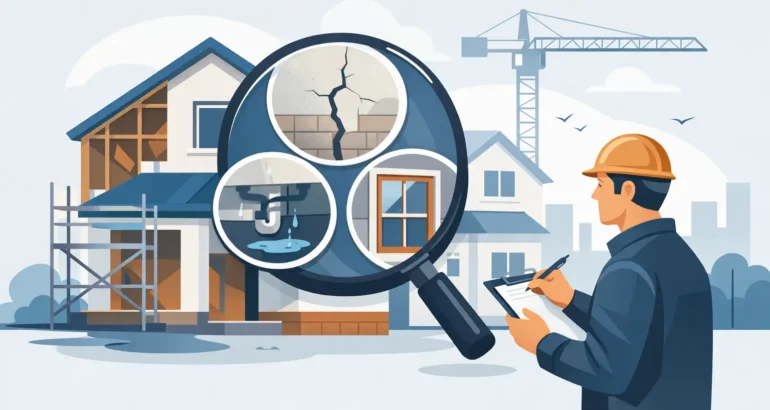
You notice the fresh paint, the clean kitchen and the untouched flooring first. What you do not see quite so easily are the issues behind the finish – the uneven brickwork, missing insulation, poor sealing around windows, or roof defects that only become obvious after the first spell of bad weather. The top defects in new builds are often not dramatic at handover, but they can affect safety, comfort, energy efficiency and long-term value if they are missed.
A new-build home should not come with the same expectations as an older property. Buyers are paying for a home that is newly constructed, built to current standards and ready for occupation. That does not mean every property is defective, but it does mean workmanship, sequencing and quality control matter. Where standards slip, the defects are often predictable.
Why the top defects in new builds keep appearing
Most recurring defects in new-build homes come down to one of three things: rushed finishing, weak supervision, or poor coordination between trades. A house can look complete while still containing a long list of faults. Plasterers, electricians, plumbers, roofers and groundworkers all affect the final result, and a problem in one area often creates defects somewhere else.
There is also a difference between cosmetic snagging and more serious building defects. Scuffed paintwork and poorly adjusted cupboard doors still need rectifying, but they are not in the same category as missing fire stopping, inadequate loft insulation or unsafe drainage falls. A proper inspection should separate minor finish issues from defects that affect performance, compliance or durability.
The top defects in new builds homeowners should know
Poor brickwork and external finishes
External defects are among the most common findings on new-build inspections. These include inconsistent mortar joints, poorly finished pointing, damaged bricks, staining to masonry, and walls that appear visibly out of line. In some cases the issue is mainly visual. In others, badly formed joints or poor detailing around openings can allow water ingress over time.
Render and cladding can also present early problems. Cracking, poor edge detailing and unfinished junctions around doors, windows and vents may indicate rushed installation. These are not just appearance issues. External envelopes need to shed water properly and remain weather resistant.
Roofing defects
Roof problems are frequently missed by buyers because they are not easy to inspect from ground level. Common issues include slipped or poorly aligned tiles, inadequate flashing, incomplete ridge bedding, poorly installed dry verge systems and blocked or badly connected gutters. These can lead to leaks, damp ingress and premature wear.
This is one area where specialist access or drone imaging can be particularly valuable. A roof may look satisfactory from the driveway while concealing defects at abutments, valleys or rear elevations. If left unresolved, relatively small roof defects can become expensive internal repair issues.
Inadequate insulation and heat loss
A new-build home should perform efficiently, but insulation defects remain a regular concern. Missing loft insulation, gaps around eaves, poorly fitted cavity insulation and thermal bridging around junctions can all reduce performance. Homeowners often notice the result before they know the cause – cold rooms, draughts and higher-than-expected heating bills.
Not every energy issue is visible during a standard walk-round. Some require thermal imaging or a more focused building performance assessment. Where insulation is incomplete or poorly installed, the effect is not only on comfort but also on condensation risk and long-term running costs.
Windows and doors that are poorly fitted
Windows and external doors are another repeat problem area. Common defects include frames installed out of plumb, gaps around reveals, failed sealant lines, sticking mechanisms and doors that do not latch correctly. If the fit is poor, the result can be water ingress, air leakage, security concerns and internal heat loss.
French doors and bi-fold systems often show adjustment issues early on. That is not unusual in itself, but repeated movement, poor alignment or visible gaps should not be dismissed as normal settling. A proper assessment should identify whether the issue is simple adjustment or evidence of wider installation faults.
Plumbing and drainage defects
Leaks beneath sinks, poorly clipped pipework, missing insulation to pipe runs and incorrect waste falls are all regularly identified in new-build homes. Some plumbing defects are obvious from day one. Others only show themselves after routine use, when slow drainage, foul odours or staining become apparent.
External drainage can also be problematic. Inspection chambers may be poorly finished, covers uneven, or surface water disposal arranged badly. Where levels and falls are incorrect, water can pond close to the property or discharge inefficiently. That becomes more than an inconvenience when damp risk increases or remedial works are needed after occupation.
Ventilation failures
Modern homes are built to tighter standards, so ventilation matters far more than many buyers realise. Extract fans that are not properly connected, underperforming systems, missing vents or poor airflow provision can all contribute to condensation and mould growth. In bathrooms, kitchens and utility spaces, that can become noticeable quite quickly.
This is a good example of where compliance and real-world performance are not always the same thing. A fan may be present, but if it is not extracting adequately, the home may still suffer from moisture-related issues. Inspection should consider both installation quality and practical operation.
Internal finishing and workmanship issues
Some of the most visible defects in new builds are internal finish problems. These include uneven plastering, cracked sealant, damaged joinery, chipped sanitaryware, hollow wall tiles, poorly cut flooring and stairs or balustrades finished below an acceptable standard. Buyers often notice these items first because they affect the day-to-day feel of the property.
While these defects can seem less serious than structural or roofing issues, they still matter. They are part of the product the buyer has paid for, and they can also indicate whether overall supervision on site was thorough or rushed. A home with widespread finishing defects sometimes has hidden quality concerns elsewhere.
Fire stopping and loft defects
Some of the most concerning defects are the ones homeowners never think to check. Missing or incomplete fire stopping around service penetrations, party wall junctions or loft areas can present a compliance and safety issue. Loft spaces also commonly reveal displaced insulation, poor boarding, cut trusses, unprotected pipework or unsealed penetrations.
These are not items a buyer can usually spot during a standard viewing. They require a trained eye and an inspection-led approach. Where defects affect compartmentation, ventilation or structural elements, they should be documented clearly and raised without delay.
Why defects are often missed at handover
The handover process is usually fast, and most buyers are focused on keys, removals and practical moving-day concerns. That is understandable. The difficulty is that many defects are easier to identify when an experienced surveyor inspects methodically, rather than when a buyer is walking through their new home for the first time.
Developers may also categorise issues as settling-in matters or minor snags. Sometimes that is fair. New materials do dry out and slight movement can occur. But not every defect can be explained away as normal shrinkage. The challenge is knowing the difference between acceptable minor movement and workmanship that falls below standard.
What an independent inspection changes
An independent snagging or new-build inspection provides documented evidence, not guesswork. That matters when you are asking a developer to return, investigate and rectify. A report should identify the location of defects, explain why they matter and present the findings clearly enough to support remedial action.
This is where inspection experience counts. A technically grounded surveyor is not simply producing a snag list. They are assessing condition, workmanship, possible compliance concerns and signs of performance failure. For homeowners approaching the end of the builder warranty period, that can be especially important. Defects that were tolerated for months often become harder to resolve once time limits tighten.
For buyers in the Midlands and South Yorkshire, firms such as New Homes Inspections provide that independent layer of scrutiny before small concerns turn into expensive disputes. The value is not just in finding faults. It is in finding the right faults, with evidence that carries weight.
When to act if you suspect defects
The best time to raise concerns is early. Pre-completion inspections can identify defects before legal completion, while post-completion snagging inspections help create a structured record once access is available. If you have already moved in, it is still worth acting as soon as patterns emerge – especially where leaks, draughts, cracking, condensation or roof concerns are involved.
There is no single defect threshold that suits every home. Some properties will have a short, manageable snagging list. Others will present more serious quality concerns that deserve broader investigation. The key is not to rely on appearance alone. A home can be newly built and still require detailed remedial work.
A new-build property should give you confidence from the outset. If something feels off, whether it is a cold bedroom, a leaking gutter or cracking that does not look right, getting independent evidence early is usually the clearest way to protect your position and your property.