
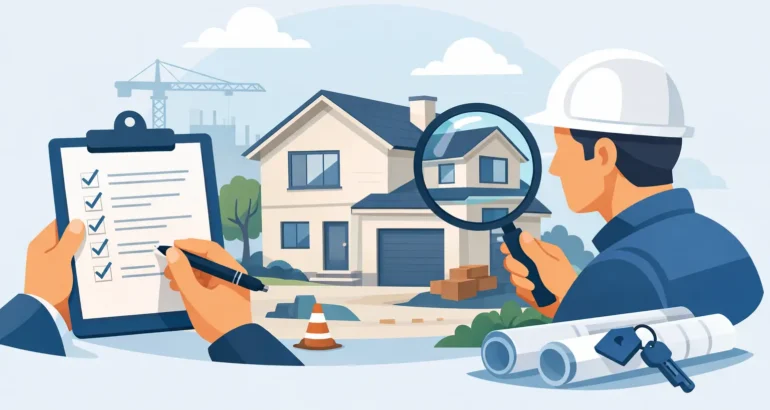
Keys are booked, removals are pencilled in, and the developer is pushing towards handover. That is exactly when a pre completion inspection new build matters most. If defects are identified before legal completion or practical handover, you are in a stronger position to have them recorded, evidenced and raised before they become your day-to-day problem.
For buyers of new-build homes across the Midlands and South Yorkshire, this inspection is not about being difficult. It is about checking whether the property you are about to take on has been finished to an acceptable standard, whether visible defects are present, and whether workmanship issues need attention before you move in. A smart finish in the sales office does not always reflect the standard inside the plot you are buying.
What is a pre completion inspection new build?
A pre-completion inspection for a new build is an independent assessment of the property shortly before handover. The aim is to identify defects, incomplete items and poor workmanship while the home is still effectively in the developer’s control. In practical terms, that usually means inspecting the property once it is sufficiently built for meaningful review but before you are living with the consequences of missed issues.
This is often referred to as a snagging inspection, but the timing matters. A true pre-completion inspection is carried out before completion or handover where access arrangements allow. That gives the buyer a documented record of concerns at a stage when remedial works can often be addressed more efficiently.
The scope can include internal finishes, external elements, visible construction quality, installation issues, and signs that standards may not have been met. It is not the same as a warranty claim months later, and it is not a substitute for broader legal checks. It is a condition-focused inspection designed to protect your position at a critical point in the purchase.
Why timing makes such a difference
Once you have completed and moved in, even straightforward defects can turn into drawn-out discussions. The developer may still be responsible for putting items right, but practical priorities change. Site teams move on, subcontractors are harder to pin down, and small defects can be treated as lower urgency after handover.
Before completion, there is usually more leverage. The property is still part of the build programme, and there is a clearer expectation that unfinished or defective items should be addressed. That does not mean every issue will be resolved immediately, because some works depend on weather, site access or drying times. It does mean the defects can be formally identified at the right stage.
For buyers, this is often the difference between moving in with confidence and moving into a list of frustrations. A professional inspection report gives you evidence, not guesswork. That matters when you are asking a developer to act.
What a surveyor is looking for
A pre-completion inspection new build is focused on observable quality and defects. That includes cosmetic snagging, but it should not stop there. An experienced inspector will also be alert to workmanship concerns that suggest bigger quality control issues.
Internally, this may include poor plaster finishes, damaged joinery, ill-fitting doors, uneven flooring, chipped sanitaryware, missing sealant, poorly finished kitchen installations, defects around windows, and signs of incomplete decoration. Externally, the inspection may identify brickwork issues, inadequate pointing, damaged components, poor drainage falls, unfinished thresholds, or problems with roof coverings visible from safe vantage points.
The detail matters because developers can be quick to dismiss vague complaints. A report that identifies the location, nature and likely significance of each issue is far more useful than telling a site manager that something “doesn’t look right”.
More than snagging – compliance and build quality
The strongest inspections are not just lists of surface marks. They are evidence-led assessments informed by relevant standards, tolerances and accepted workmanship expectations. That is particularly important with new-build homes, where buyers are often told that defects are normal or within tolerance.
Sometimes that is true. Not every imperfection justifies formal challenge, and good inspectors should say so. New homes are built using multiple trades under programme pressure, and minor cosmetic issues can occur. The question is whether the finish and construction quality are acceptable, and whether defects point to non-compliance, poor workmanship or incomplete work.
That is why an independent inspection carries weight. A qualified surveyor can distinguish between a minor snag and a more meaningful defect. They can also present findings in a way that supports sensible action rather than noise.
What happens during the inspection
Access arrangements vary by developer. Some allow accompanied pre-handover inspections, while others restrict timing or limit who can attend. It depends on site policy, build stage and whether the home is genuinely ready for inspection. Where access is possible, the inspection is carried out methodically, room by room and element by element, with supporting photographs and notes.
The resulting report should be clear, structured and practical. Buyers do not need pages of jargon. They need a document that identifies defects, explains what has been found and helps them raise the right points with the developer. For more complex concerns, the wording should be precise enough to show why the item matters.
This is where independence is important. A developer’s own quality checks are part of the process, but they are not the same as having a surveyor acting solely in your interest. The value is in unbiased reporting backed by inspection experience.
Common issues found in new-build homes
Even on well-presented sites, similar defects appear again and again. Finishes are often rushed at the end of a build programme, and that is when avoidable issues creep in. Misaligned doors, damaged frames, poor mastic work, incomplete decoration, cracked tiles, uneven paving and defects to brickwork are all common.
Some properties also show signs of more significant concern, such as inadequate loft insulation coverage, poorly installed ventilation components, missing fire stopping, or roof defects that are not obvious from ground level to the untrained eye. Not every pre-completion inspection will reveal serious issues, but when they are present, catching them early matters.
There is also a practical point here. Buyers tend to notice only the most visible defects on a first walk-round. A trained inspector is looking at the whole property systematically, including areas many buyers would not think to question.
Is it worth it if the property comes with a warranty?
Yes, in most cases it is. A structural warranty has value, but it is not a substitute for identifying defects before you take possession. Warranties typically deal with defined categories of problem, and the route to getting action can be slower and more limited than buyers expect.
Many issues found at pre-completion stage are not major structural failures. They are defects of finish, workmanship, installation or incomplete construction that still affect the quality, use and value of the home. A warranty may not be the easiest route for those items, whereas a documented pre-handover inspection gives you a direct basis for raising them with the developer.
That said, it depends on timing and access. If a developer does not permit a true pre-completion inspection, a post-completion snagging survey as soon as possible after handover is still far better than waiting months.
Choosing the right inspection service
Not every surveyor specialises in new-build homes, and that matters. Pre-completion inspections require familiarity with the recurring defects seen on developer-built properties, along with an understanding of relevant standards and reporting expectations. Buyers should look for an independent provider with clear professional credentials, suitable insurance and a reporting style built around evidence.
For homes with harder-to-view roof areas or suspected heat loss concerns later down the line, specialist capability also makes a difference. New Homes Inspections, for example, positions its service around independent, standards-led assessment rather than developer reassurance. That is the right approach if your goal is to protect your investment with credible evidence.
A better way to approach handover
The best time to challenge defects is before they become normalised. A pre-completion inspection does not guarantee a perfect home, and no honest surveyor should promise that. What it does give you is a measured, professional view of the property’s condition at a key stage, along with the evidence needed to press for remedial action.
If you are about to complete on a new-build home, do not rely on a quick walk-through and a hopeful eye. Treat handover as the point where standards should be checked properly. It is far easier to move in with confidence when the issues have already been identified, recorded and put firmly on the developer’s radar.